Best Foods to Store for Long-Term Emergencies (Complete Survival Food Guide)
Learn the best foods to store for long-term emergencies, including rice, beans, canned meat, and freeze-dried meals. Build a reliable survival food supply today.
EMERGENCY PREPAREDNESS
Global Survivalist Team


Calories matter.
Nutrition matters.
Shelf life matters.
When emergencies happen, food becomes more than comfort. It becomes stability. It becomes leverage. It becomes survival.
A short disruption can be handled with a quick grocery run. But during long-term emergencies β power grid failures, supply chain breakdowns, natural disasters, economic instability, or civil unrest β access to food can change quickly.
Preparedness is not about fear. It is about control.
Food security reduces panic.
If you know your family has enough calories, balanced nutrition, and long shelf-life supplies, your stress level drops immediately. That mental advantage alone is powerful.
This guide will walk you through the best foods to store for long-term emergencies, why they matter, how to store them properly, and how to rotate them efficiently so nothing goes to waste.
What Makes a Food Ideal for Long-Term Storage?
Before building a food reserve, you must understand what actually matters.
Not all foods are equal in emergencies.
An ideal long-term storage food must meet at least three criteria:
1. High Caloric Density
Calories are energy.
Energy equals function.
During emergencies, your body may burn more calories due to stress, manual tasks, temperature changes, or limited rest.
Low-calorie foods take up space but do not provide sustained energy.
You need calorie efficiency.
2. Nutritional Value
Calories alone are not enough.
You also need:
β’ Protein for muscle maintenance
β’ Carbohydrates for energy
β’ Fats for sustained fuel
β’ Fiber for digestion
β’ Basic micronutrients
A balanced storage plan prevents weakness and fatigue over time.
3. Long Shelf Life
Shelf life determines security.
Foods that last:
β’ 1β2 years are short-term backups
β’ 5+ years are mid-term security
β’ 10β25 years are strategic reserves
Long shelf life reduces maintenance and rotation pressure.
Top Foods to Store for Long-Term Emergencies
Letβs break down the best practical options.
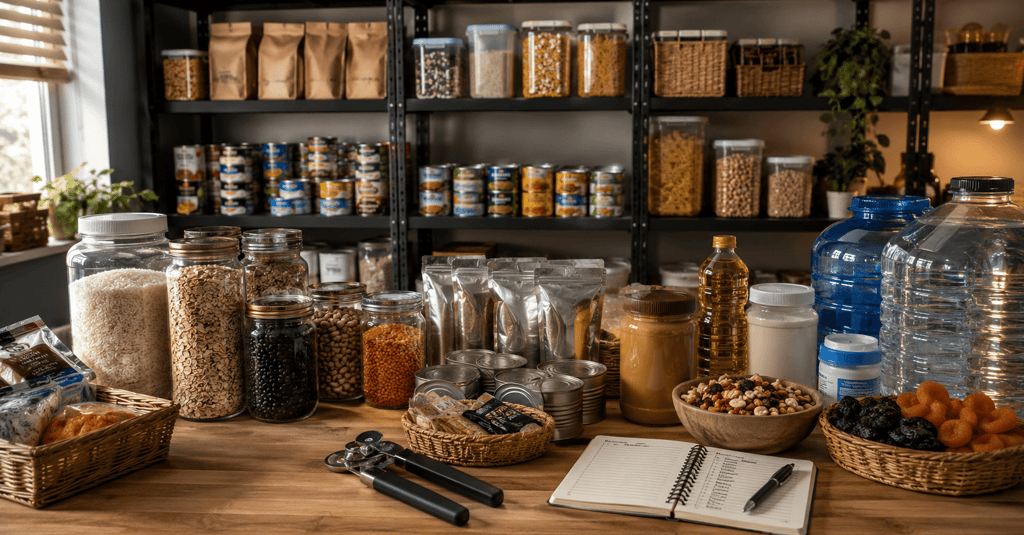
1. White Rice
White rice is one of the most efficient survival staples.
Why?
β’ Extremely long shelf life (up to 25+ years if stored properly)
β’ High caloric density
β’ Easy to cook
β’ Compatible with many foods
White rice is superior to brown rice for long-term storage because brown rice contains natural oils that reduce shelf life.
Storage Tip:
Store in Mylar bags with oxygen absorbers, inside airtight buckets.
Why it works:
Rice provides a reliable carbohydrate base. It stretches canned meat, beans, or vegetables.
2. Dried Beans
Beans are protein security.
They provide:
β’ Protein
β’ Fiber
β’ Complex carbohydrates
β’ Micronutrients
Dried beans can last 10+ years when properly stored.
Varieties to consider:
β’ Pinto beans
β’ Black beans
β’ Kidney beans
β’ Lentils (cook faster)
Beans combined with rice create a complete protein profile.
Storage Tip:
Keep in airtight containers in a cool, dry place.
3. Canned Meat
Protein becomes critical during extended emergencies.
Canned options:
β’ Tuna
β’ Chicken
β’ Salmon
β’ Spam
β’ Sardines
Advantages:
β’ Ready to eat
β’ No refrigeration required (until opened)
β’ High protein
β’ Long shelf life (3β5 years average)
Canned meat adds essential nutrients and morale-boosting variety.
4. Oats
Oats are underrated emergency food.
They offer:
β’ Fiber
β’ Sustained energy
β’ Versatility (breakfast, baking, thickener)
β’ 5β10 year shelf life (proper storage)
Oats require minimal preparation and provide comfort during stressful times.
Comfort food matters psychologically.
5. Peanut Butter
Peanut butter is calorie-dense survival fuel.
Benefits:
β’ High fat content
β’ Protein
β’ No cooking required
β’ Easy for children
Shelf life: 1β2 years (rotate regularly)
It provides fast calories when cooking fuel is limited.
6. Freeze-Dried Meals
For long-term preparedness, freeze-dried meals offer convenience and longevity.
Advantages:
β’ 20β25 year shelf life
β’ Lightweight
β’ Easy to prepare (just add water)
β’ Balanced nutrients
Disadvantages:
β’ More expensive
β’ Require water supply
They are ideal for backup reserves, evacuation kits, or secondary food security layers.
Additional Smart Long-Term Food Options
To strengthen your storage plan, consider adding:
β’ Pasta
β’ Flour
β’ Sugar
β’ Salt
β’ Cooking oil (rotate often)
β’ Powdered milk
β’ Honey (indefinite shelf life)
β’ Dehydrated vegetables
β’ Instant coffee or tea (morale factor)
Variety reduces appetite fatigue.
Eating the same food daily reduces morale and intake over time.
How Much Food Should You Store?
A simple rule:
Minimum target:
72 hours (short-term emergency)
Better target:
2 weeks
Strong preparedness:
30 days
Strategic preparedness:
3β6 months
Calorie guideline:
2,000β2,500 calories per adult per day
Calculate:
People Γ days Γ calories
Then build backward using staple foods.
Proper Food Storage Conditions
Even the best foods fail if stored incorrectly.
Follow these four principles:
Store Cool
Ideal temperature:
50β70Β°F (10β21Β°C)
Heat shortens shelf life dramatically.
Avoid:
β’ Attics
β’ Garages with temperature swings
β’ Near heaters
Store Dry
Moisture causes:
β’ Mold
β’ Spoilage
β’ Packaging breakdown
Use:
β’ Oxygen absorbers
β’ Desiccants
β’ Airtight containers
Store Airtight
Air equals oxidation.
Use:
β’ Mylar bags
β’ Food-grade buckets
β’ Vacuum sealing
Label everything clearly.
Rotate Annually
Rotation prevents waste.
Use FIFO:
First In, First Out.
Consume older items. Replace immediately.
Preparedness should integrate into normal life.
Water: The Silent Partner of Food Storage
Food without water is useless.
Store:
Minimum 1 gallon per person per day.
For long-term planning:
3 gallons per person minimum baseline.
Include:
β’ Water purification tablets
β’ Filters
β’ Backup containers
Dehydrated food requires additional water.
Plan accordingly.
Avoid Common Food Storage Mistakes
Storing only one type of food
Ignoring protein
Forgetting cooking fuel
Storing in hot garages
Failing to label expiration dates
Not rotating annually
Ignoring water requirements
Mistakes create false confidence.
Psychological Benefits of Food Security
Food stability reduces panic.
When you know your family can eat for weeks without external support:
β’ Anxiety drops
β’ Decision-making improves
β’ Evacuation pressure decreases
β’ Emotional stability increases
Preparedness is not only physical.
It is mental control.
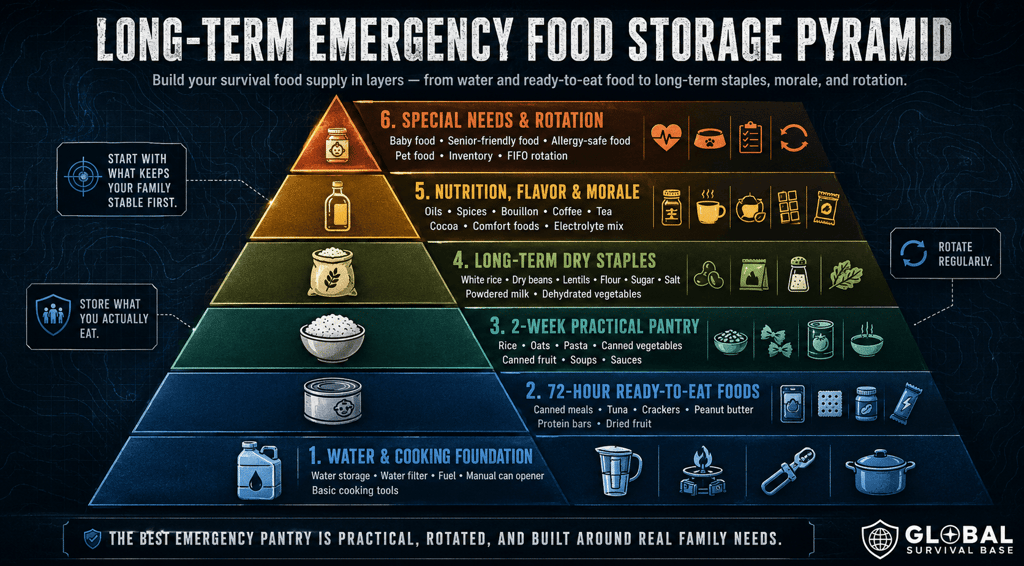
Layered Food Strategy (Recommended Model)
Think in layers:
Layer 1:
Everyday pantry (1β2 weeks)
Layer 2:
Deep pantry (30 days)
Layer 3:
Long-term reserve (3+ months)
Layer 4:
Freeze-dried strategic backup
Layering spreads risk.
Long-Term Emergencies That Justify Food Storage
Food storage is not extreme thinking.
Realistic disruptions include:
β’ Power grid failures
β’ Supply chain breakdown
β’ Natural disasters
β’ Economic instability
β’ Cyber attacks
β’ Transportation strikes
Food shortages rarely begin dramatically.
They begin gradually.
Prepared individuals stay ahead of disruption.
Final Thought: Preparedness Creates Stability
Calories matter.
Nutrition matters.
Shelf life matters.
But discipline matters most.
Food storage is not hoarding.
It is structured resilience.
You do not need to build a bunker.
You need:
β’ Strategic staples
β’ Proper storage
β’ Consistent rotation
β’ Balanced nutrition
β’ Water integration
Food security reduces panic.
When others rush to empty shelves, you stay calm.
When systems strain, you remain stable.
Preparedness turns uncertainty into manageable inconvenience.
And that difference changes everything.
Guided Learning Articles
Backyard Food Security: How a Family of Four Can Produce Food at Home
Family Emergency Preparedness Plan: A Complete Step-by-Step Blueprint (2026 Guide)
Download Free Printable Preparedness Checklists Series :
Designed to help individuals and families prepare with structure, clarity, and confidence.
If you havenβt built your full survival foundation yet,
begin with our complete preparedness guide
Explore more:
Why Prepare | Survival Skills | Scenarios | Preparedness Guide | Resources
About
Contact
Privacy Policy
Terms of Use
Disclaimer
Global Survival Base
An Independent Global Preparedness and Survival Education Platform.
Practical, real-world survival knowledge.