How to Build an Improvised Water Filter in a Survival Situation (Step-by-Step Survival Guide)
Learn how to build an improvised water filter in a survival situation using simple materials like sand, charcoal, and gravel. This step-by-step guide shows how to turn dirty water into safer drinking water during emergencies.
SURVIVAL SKILLS
Global Survivalist Team
3/5/20266 min read
Water is the single most important resource in any survival situation. Humans can survive weeks without food, but only about three days without water. In emergencies such as natural disasters, wilderness survival scenarios, or infrastructure collapse, access to clean drinking water can quickly disappear.
Rivers, lakes, and even rainwater may look clean, but they often contain bacteria, parasites, sediment, and harmful microorganisms that can cause severe illness. Drinking untreated water can lead to diseases such as giardia, dysentery, and cholera.
Fortunately, even without modern equipment, it is possible to build an improvised water filter using simple materials found in nature or common household items. While these filters are not perfect replacements for professional purification systems, they can significantly improve water quality and increase your chances of survival.
This guide will walk you through how to build a survival water filter step-by-step, explain the science behind filtration, and show you multiple methods depending on what materials you have available.
Why Water Filtration Is Critical in Survival Situations
Before building a survival filter, it's important to understand why filtering water matters.
Contaminated water may contain several dangerous elements:
1. Sediment and Debris
Mud, sand, leaves, and organic matter often contaminate natural water sources.
2. Bacteria
Examples include:
E. coli
Salmonella
Campylobacter
These can cause severe gastrointestinal illness.
3. Parasites
Parasites such as Giardia and Cryptosporidium are commonly found in untreated water.
4. Chemical Contamination
In urban disasters, water may contain:
fuel
pesticides
industrial runoff
5. Viruses
Though less common in wilderness water sources, viruses may be present in contaminated environments.
A properly built improvised filter can remove many physical contaminants, but it should ideally be combined with boiling or chemical purification for maximum safety.
Materials You Can Use to Build an Improvised Water Filter
One of the advantages of survival filtration is that it can be built using very basic materials.
Common items include:
Natural Materials
Sand
Gravel
Small stones
Charcoal from a fire
Grass
Cloth
Moss
Household Items
Plastic bottle
Coffee filter
T-shirt fabric
Bandana
Socks
Bucket
Container
Tools (Optional)
Knife
Scissors
Fire source
The goal is to create multiple filtration layers that remove progressively smaller particles.
The Science Behind a Survival Water Filter
Understanding how filtration works helps you build a more effective filter.
Improvised filters rely on three primary filtration processes:
1. Mechanical Filtration
Layers of gravel and sand physically trap dirt and particles.
2. Absorption
Charcoal absorbs chemicals, toxins, and odors.
3. Sedimentation
Slower water flow allows heavy particles to settle.
Combining these methods creates a multi-layer survival filter, which is far more effective than a single material filter.
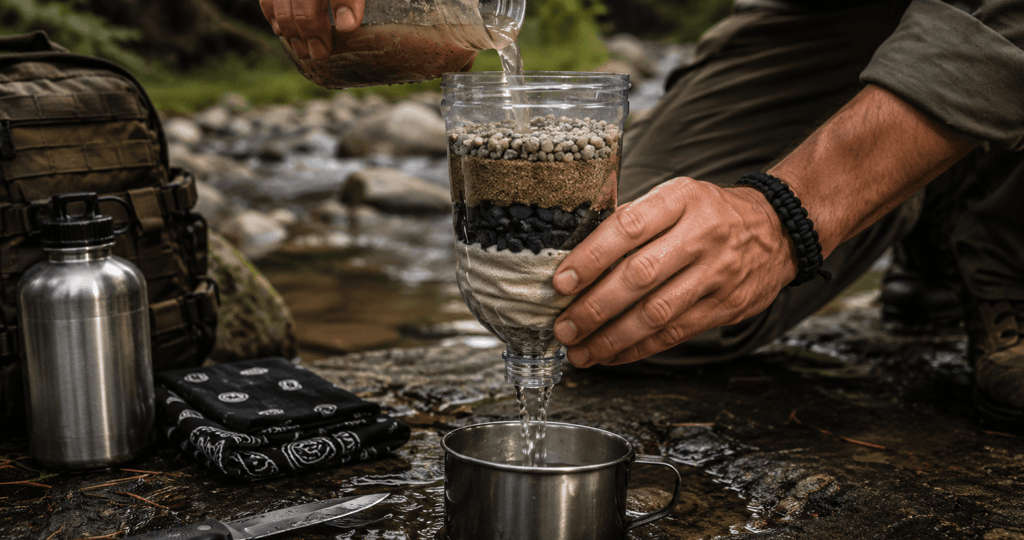
Method 1: The Plastic Bottle Survival Water Filter
This is one of the most effective improvised survival filters because it allows you to build multiple filtration layers.
Materials Needed
Plastic bottle
Charcoal
Sand
Gravel
Cloth or coffee filter
Knife or scissors
Container for filtered water
Step 1: Prepare the Bottle
Cut the bottom off the plastic bottle.
Turn the bottle upside down so the cap points downward.
Remove the cap.
You now have a funnel-shaped filter housing.
Step 2: Add the Cloth Layer
Place a cloth, bandana, or coffee filter in the bottle neck.
This layer prevents fine materials from escaping.
It also provides the final filtration stage.
Step 3: Add Charcoal
Crush charcoal from a fire into small pieces.
Add a layer about 2β3 inches thick.
Charcoal is extremely important because it:
removes odor
absorbs chemicals
improves taste
This step significantly improves water quality.
Step 4: Add Sand
Add a layer of fine sand above the charcoal.
The sand captures small particles that pass through gravel layers.
Depth recommendation:
2β3 inches.
Step 5: Add Gravel or Small Stones
Add a top layer of gravel.
This layer:
blocks large debris
prevents sand from shifting
distributes water evenly
Step 6: Pour Water Slowly
Pour dirty water slowly into the filter.
Water will pass through:
Gravel
Sand
Charcoal
Cloth
Then it will drip into your clean container.
Step 7: Repeat Filtration
For better results, filter the water multiple times.
Each pass improves clarity and removes more particles.
Method 2: Survival Water Filter Using Natural Materials
If you are stranded in the wilderness without containers, you can build a natural filtration system using the ground.
Step 1: Dig a Filtration Hole
Dig a hole about 1β2 feet deep near a water source.
This hole will fill with groundwater filtered through soil.
Step 2: Allow Water to Seep In
Over time, water will seep through the surrounding soil into the hole.
The earth naturally filters out:
sediment
debris
some bacteria
Step 3: Collect the Water
Carefully scoop the clearer water from the hole.
Although cleaner than the original source, it should still be boiled if possible.
Method 3: Charcoal Stick Filter
If you have minimal materials but access to fire, charcoal alone can help.
Step 1: Create Charcoal
Burn hardwood in a fire until it becomes charcoal.
Allow it to cool.
Step 2: Crush the Charcoal
Break it into small granules.
Avoid powder.
Step 3: Wrap in Cloth
Place charcoal in cloth and tie it into a pouch.
Step 4: Pour Water Through It
Slowly pour water through the charcoal pouch.
This method removes:
odors
some toxins
small particles
However, it is less effective than multi-layer filtration.
Method 4: Multi-Container Gravity Filter
If you have buckets or containers, you can build a larger survival filtration system.
Step 1: Stack Containers
Use two containers:
Top container β filtration materials
Bottom container β clean water
Step 2: Drill or Punch Holes
Create small holes in the bottom of the top container.
Step 3: Add Filtration Layers
From bottom to top:
Cloth
Charcoal
Sand
Gravel
Step 4: Pour Water Into Top Container
Water slowly passes through layers and drips into the lower container.
Gravity does the work.
Important Step: Always Purify Filtered Water
Improvised filters remove many contaminants but not all pathogens.
After filtering, you should purify the water.
Method 1: Boiling
Boiling is the most reliable survival method.
Steps:
Bring water to a rolling boil.
Boil for at least 1 minute.
At high altitude, boil 3 minutes.
This kills most bacteria, viruses, and parasites.
Method 2: Solar Disinfection (SODIS)
If boiling isn't possible:
Fill a clear plastic bottle.
Place in direct sunlight.
Leave for 6 hours.
UV radiation helps destroy microorganisms.
Method 3: Chemical Treatment
Emergency chemicals include:
iodine tablets
chlorine tablets
household bleach (very small amounts)
These kill microorganisms effectively.
Tips to Improve Your Improvised Water Filter
To maximize the effectiveness of your filter:
Use Multiple Layers
More layers = better filtration.
Filter Slowly
Slow filtration improves particle removal.
Replace Materials Regularly
Dirty filters become ineffective.
Use the Cleanest Source Possible
Choose flowing water instead of stagnant pools.
Avoid Chemical Contamination
Improvised filters cannot remove heavy metals or industrial chemicals effectively.
Best Natural Water Sources in Survival Situations
If you must find water, look for these sources:
Flowing Streams
Moving water is usually cleaner.
Rainwater
One of the safest natural sources.
Morning Dew
Can be collected using cloth.
Melted Snow
Must always be boiled.
Plant Transpiration
Plastic bags tied to plants collect moisture.
Signs That Water Is Unsafe
Avoid water that has:
strong chemical smell
oily film on the surface
bright unnatural colors
dead animals nearby
These signs may indicate chemical contamination.
Improvised filters cannot remove many industrial toxins.
Common Mistakes When Building a Survival Water Filter
Many beginners make mistakes that reduce filtration effectiveness.
Using Only One Material
A single layer (like sand alone) is not effective.
Always combine materials.
Filtering Too Quickly
Pouring water too fast reduces filtration time.
Slow flow improves purification.
Skipping the Boiling Step
Even clear water may contain dangerous microbes.
Always purify if possible.
Using Dirty Containers
Clean containers are essential to avoid re-contamination.
How Long an Improvised Filter Lasts
Improvised filters are temporary.
They typically last:
several hours
one or two days
After extended use, materials become clogged.
You must replace sand and charcoal regularly.
Why Every Survival Kit Should Include a Water Filter
Although improvised filters are helpful, it is always better to carry professional water purification tools.
Recommended survival gear:
portable water filters
purification tablets
metal container for boiling
collapsible water bottles
These items dramatically increase survival odds.
Final Thoughts
Knowing how to build an improvised water filter in a survival situation is one of the most valuable preparedness skills you can learn. Whether you are facing a wilderness emergency, a natural disaster, or infrastructure failure, access to safe drinking water will determine your ability to survive.
By using simple materials such as sand, gravel, charcoal, and cloth, you can create an effective multi-layer filtration system that removes many contaminants and improves water clarity. When combined with boiling or chemical purification, this method can transform unsafe water into a life-saving resource.
Preparedness is about knowledge as much as equipment. The more survival skills you master today, the more resilient you will be when emergencies occur.
Clean water is survival β and knowing how to create it from almost nothing could save your life.
Frequently Asked Questions
Can you drink water from an improvised water filter?
Improvised water filters can remove sediment and debris, but they may not eliminate all bacteria and viruses. For maximum safety, filtered water should always be boiled or chemically treated before drinking.
What materials work best for a survival water filter?
The most effective materials include charcoal, sand, gravel, and cloth. These materials create multiple filtration layers that remove particles and improve water quality.
How long does a DIY survival water filter last?
Improvised filters typically last only a short time. The filtration materials should be replaced regularly because dirt and contaminants will clog the filter.
Is charcoal important in water filtration?
Yes. Charcoal helps absorb toxins, chemicals, and odors. It is one of the most effective natural filtration materials available in survival situations.


Improvised water filter survival infographic charcoal sand gravel
Recommended Articles
Family Emergency Preparedness Plan: A Complete Step-by-Step Blueprint (2026 Guide)
The 72 Hour Rule: Why the First 3 Days Decide Survival in a Crisis
How Long Can You Survive Without Water? (Scientific Breakdown).
Download Free Printable Preparedness Checklists Series :
Designed to help individuals and families prepare with structure, clarity, and confidence.
About
Contact
Privacy Policy
Terms of Use
Disclaimer
Global Survival Base
An Independent Global Preparedness and Survival Education Platform.
Practical, real-world survival knowledge.